Beginner Basics
How Space-A Actually Works in 2026
How military Space-A travel really works in 2026 — sign-up windows, roll call, the new DAFI rules, and what nobody tells first-timers.
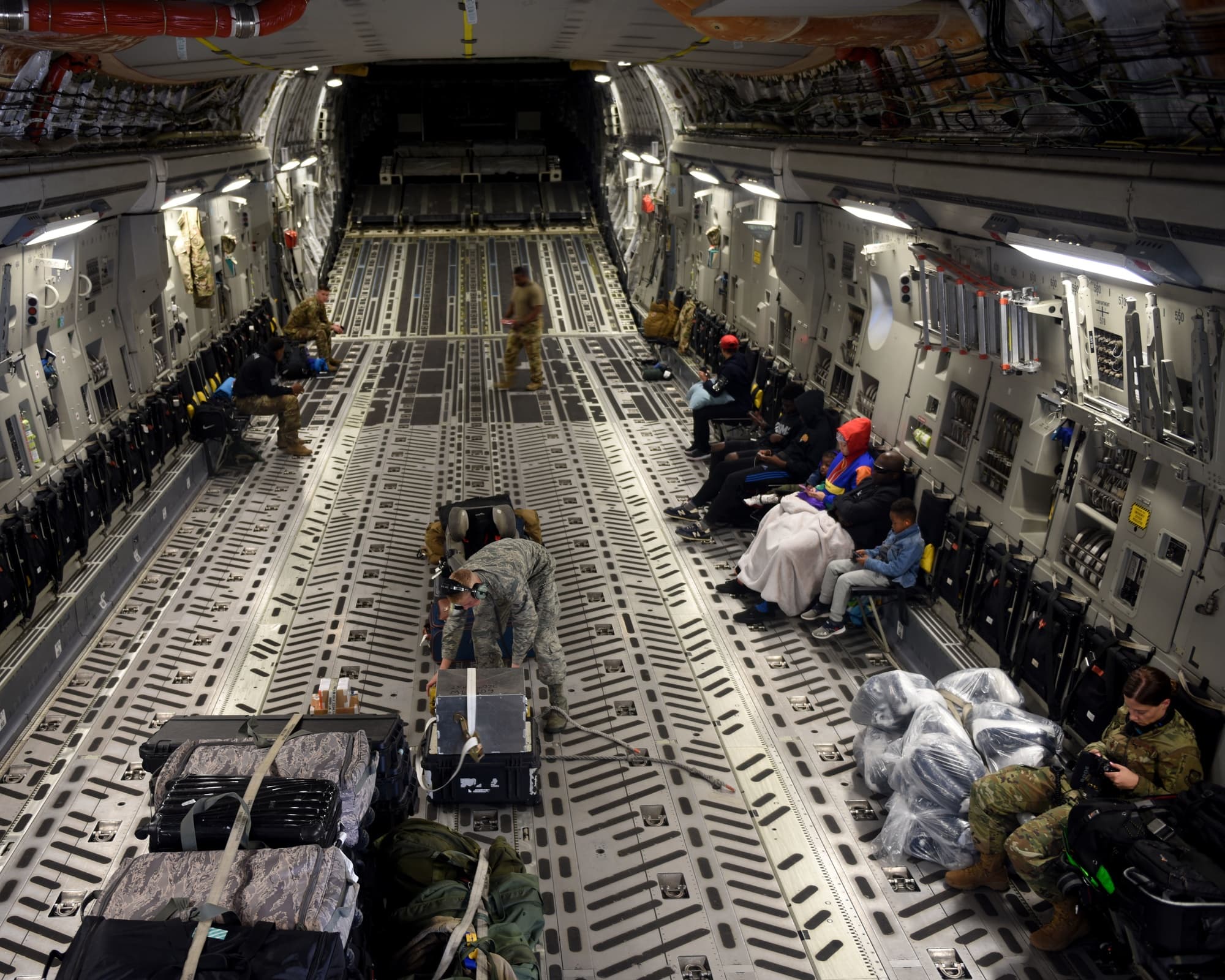
Photo: U.S. Air Force / 2nd Lt. Richard Longoria, 60th Air Mobility Wing, DVIDS. Public domain.
Space-A right now
Browse flights →1,691
Seats on the board
77
Flights in next 72h
40
Terminals tracked
Updates every 10 minutes from each terminal's posted 72-hour schedule.
If you've heard of Space-A travel for years and still don't really understand how it works — you're not alone. The Department of War's Space Available program is real, it's legal, it's free or nearly free, and most of what's published about it lives in two long regulations and across 200+ traveler Facebook groups. Those groups are genuinely valuable — they're responsive, knowledgeable, and full of people who've flown the routes you're planning. The challenge is volume: with hundreds of groups, each terminal posting separately, and the official schedule postings split across individual terminal websites and recorded phone lines, it can take serious effort just to figure out what's flying tomorrow. The Browse Flights board on Space-A+ consolidates every posted schedule from 40 terminals into one place so you can see the network at a glance — but the underlying terminal sites and phone recordings are always the authoritative source if you want to verify a specific flight.
This post is the orientation: the categories, the sign-up mechanics, what to bring, what roll call is like, what the flight itself is like, and what to do when you don't get on. Where the answer is "it depends," we'll tell you what it depends on. Where the answer is in a regulation, we'll cite the regulation by paragraph.
If you've never flown Space-A, this is the starting point. If you have, treat it as a 2026 refresher — several rules changed in the last two years.
The two regulations that govern everything
Every Space-A question eventually traces back to one of two documents. You don't need to memorize them, but knowing they exist (and what each one does) is how you settle factual disputes when traveler accounts conflict.
DoDI 4515.13 (Change 7, 11 January 2024) sets who can fly and in what priority. Table 3 lists all 51 specific traveler types and assigns each to one of six categories.
DAFI 24-605V2 (30 January 2025) sets how the program runs — roll-call timing, baggage rules, sign-up timestamps, head-tax collection, what happens during delays. When a passenger service agent quotes you a rule, they're almost certainly reading this.
Both are cited inline below. Bookmark them — they settle 95% of "is this true?" arguments. The full beginner's reference page at the Space-A+ Beginner's Guide cross-references both throughout.
The six priority categories — who gets on first
Inside the terminal, every Space-A traveler is sorted into one of six categories. Higher category = higher priority. Within a category, position is set by sign-up date and time, in Zulu (GMT) — per DAFI 24-605V2 § 2.29.1 (with § 2.25.4 also referencing Julian date and Zulu time), your timestamp is recorded in GMT, not your local time.
Space-A Eligibility Categories
| Category | Who | Description |
|---|---|---|
| Cat I | Emergency Leave / Unfunded Travel | Highest priority. Death or serious illness of immediate family. Wounded Warriors on leave. Rarely used recreationally. |
| Cat II | Accompanied EML | Environmental Morale Leave from designated remote locations (Diego Garcia, parts of the Pacific, etc.). Sponsor and dependents travel together. |
| Cat III | Ordinary Leave, House-Hunting, MOH Holders, Foreign Military | The most common active-duty category. Active members on leave, house-hunting permissive TDY, Medal of Honor recipients, foreign exchange officers, unaccompanied dependents of members deployed over 365 days. |
| Cat IV | Unaccompanied EML | Dependents traveling under EML on their own. DoDEA teachers traveling during summer. Unaccompanied dependents of members deployed at least 30 days. |
| Cat V | Permissive TDY, Students, Command-Sponsored Dependents, Post-Deployment Respite | OCONUS-resident college students traveling once per year, Service Academy entrance examinees, PDMRA travelers, command-sponsored OCONUS dependents traveling without their sponsor. |
| Cat VI | Retirees, Reserve/Guard, ROTC/NUPOC/CEC, 100% DAVs, Surviving Spouses | The largest population and the lowest priority. Most leisure Space-A travelers are here. |
Source: DoDI 4515.13. Roll call walks Cat I first, Cat VI last; within a category, earliest sign-up date wins. Cat III–VI sign-up window opens 60 days before travel; Cat I/II are event-driven.
Critical 2026 reminder for Cat VI travelers: Reserve/Guard "gray-area retirees" (Table 3 item #39) and 100% disabled veterans (Table 3 item #47) are restricted to travel within and between CONUS, Alaska, Hawaii, Puerto Rico, the U.S. Virgin Islands, Guam, and American Samoa (Guam and American Samoa travelers may transit Hawaii or Alaska). Travel to Japan, Korea, Europe, Diego Garcia, or other OCONUS destinations is not authorized under these eligibilities. AMC turns travelers away at the counter for this every week. If you fall in either group, your route map looks very different from a regular military retiree's.
If you're not sure which category you fall into, the easiest path is the Space-A+ Eligibility Wizard — it walks you through the 51 Table 3 cases in under two minutes. Once you've created a Space-A+ profile, your eligibility is saved and travels with you across every trip you plan on the site, so you don't have to re-check it each time.
The two arms of the Space-A network
Once you understand categories, the next conceptual leap is realizing that "Space-A" is really two different operating models stitched into one program. Most first-timers think of Space-A as one thing. It isn't.
1. The Patriot Express (PE) — "the Rotator." Commercial-charter passenger jets flown for the DoW by contract carriers. PE flies a fixed published schedule between CONUS gateways (BWI, Seattle-Tacoma, Travis) and overseas hubs (Ramstein in Europe; Yokota, Kadena, Osan, Andersen and Hickam in the Pacific). PE seats are released to Space-A after PCS/TDY official travelers book through their installation's TMO. You pay the federal head tax (typically $23.40 international, $11.70 Alaska/Hawaii, plus an FIS fee on Ramstein returns) — see the live breakdown below. You can travel with pets on PE, but only if you're in PCS status — not as a Space-A traveler.
2. Cargo/organic missions. Military aircraft flying real-world missions — moving cargo, repositioning, training, supporting exercises. They go where the mission goes, often with little warning. Most cargo missions are free to Space-A passengers. Seat counts can swing from 0 to 80+ depending on cargo load. No pets. The schedule isn't really a schedule — it's a 72-hour rolling forecast that updates as missions get tasked.
If you want predictability, target PE. If you want maximum free flights, target organic. Smart travelers sign up at terminals that serve both.
Space-A taxes & fees
| Charge | Amount | Applies to |
|---|---|---|
| International head tax | $23.40 / person | Outbound international Patriot Express segments. |
| Alaska / Hawaii head tax | $11.70 / person | AK / HI segments on Patriot Express; AK / HI segments on AMC-charter rotators. |
| Domestic segment fee | $5.30 / person | Each domestic CONUS-CONUS segment within a Patriot Express itinerary. |
| Pure military airlift | Free | C-5 / C-17 / KC-135 missions with seats. No tax for Space-A pax. |
Source: IRS Form 720 instructions. Bring cash or a card — most terminals charge at check-in.
The sign-up process, end to end
You sign up at a terminal — not for a specific flight. Once active, your sign-up makes you eligible for every flight that departs that terminal toward one of your listed destinations for up to 60 days. Most travelers sign up at 3–5 terminals to maximize chances.
There are two ways to handle the mechanics: do it manually at each terminal, or do it through Space-A+.
Option A: Manual, terminal by terminal. Contact each terminal directly via the email address or online sign-up form on its AMC page, list up to five destination countries, and wait for the auto-reply confirming your sign-up is active. Then watch each terminal's 72-hour schedule yourself — and call the phone recording for changes that haven't been published yet. Plan to repeat this five-step workflow at every terminal you want to sign up at.
Option B: Through Space-A+. Once you've set up your profile and confirmed eligibility, Plan a Trip handles the mechanics:
- Enter your trip once — origin region, destinations, travel window.
- Space-A+ identifies the relevant terminals automatically based on your route and submits your sign-up to each in parallel. No copy-pasting forms five times.
- Confirmations land in your dashboard as terminals respond, so you can see at a glance which sign-ups are active.
- Matching flights surface in Browse Flights as soon as they post to any of your sign-up terminals. With a Space-A+ account, you can save the route and receive email notifications (hourly or daily) the moment a matching flight appears.
- Show up at the terminal a few hours before roll call when a flight you want posts.
Either way, the rule that catches first-timers is the same: family groups can register together; non-family must register individually (DAFI 24-605V2 § 2.27.4). One person can't sign a friend up for Space-A. Each independent adult registers their own slot — Space-A+ profiles are per-traveler for the same reason.
What to bring: IDs, documents, and baggage
The most common reason travelers get turned away at the counter isn't priority — it's paperwork. Walk through this list before you leave home.
IDs that work at the counter.
- Active-duty members: CAC (Common Access Card). For OCONUS travel, also bring a passport — some destinations require it even on official orders.
- Dependents: Unified U.S. USID (Uniformed Services ID) card with a dependent affiliation block. Must be unexpired — expired dependent IDs cannot fly. (The legacy DD Form 1173 plastic card is being phased out for the USID; if you still hold one, confirm the expiration date before relying on it.)
- Retirees and 100% DAVs: Unified U.S. USID with the appropriate affiliation block ("Reserve Retired," "100% DAV," etc.) — the post-Change-7 DoDI 4515.13 standard. (DD Form 2 (Retired) plastic cards and the older VHIC remain in circulation but are being replaced by the USID.) Plus a passport for OCONUS.
- All travelers to OCONUS destinations: bring your passport even if you think you don't need it. SOFA-status countries (Japan, Korea, Germany) often require the passport stamp on arrival, not just the CAC.
- Children: a copy of the child's birth certificate plus the child's dependent ID. A parent's ID alone is not enough.
Expired IDs are the single most common reason travelers are turned away at the counter. Confirm every traveler's ID has at least 90 days of validity past your latest planned return date before you sign up. Renewing on the road is not realistic.
Baggage — what you can bring.
Per DoDI 4515.13 § 4.2.a (cross-referenced in DAFI 24-605V2 § 2.108), each Space-A traveler may check:
- 2 pieces, each up to 70 lb (140 lb total checked).
- 1 carry-on that fits the aircraft's overhead or under-seat space.
- 1 small personal item (purse, laptop bag, diaper bag).
Cargo aircraft can occasionally allow excess baggage if weight and pallet space permit, but never assume it — the load planner makes the call at the counter, and Space-A excess loses every tie-break.
Two things to know about the 19-seat cap you'll see on some cargo missions: per DAFI § 4.7.5, load planners must leave a pallet position open to accommodate baggage when 20+ passengers are aboard, and that pallet position counts against the seat count. The escape hatch: if every passenger packs down to one carry-on plus a small personal item — no checked bags — the crew can often seat more than 19 by floor-loading what little baggage there is, or going hand-carry-only. Pack light if you want to maximize boarding odds on a popular cargo mission.
Roll call — the moment everything happens
"Roll call" is when the terminal announces the flight, releases the actual seat count, and calls names in priority order. Five things matter here:
- Be physically present. If your name is called and you aren't standing at the counter, you're skipped. No exceptions.
- Roll-call timing varies, but has a floor. Per DAFI 24-605V2 § 2.13 (the 2h-20m floor) and § 2.34 (Space-Available roll call), no roll call can happen earlier than 2 hours 20 minutes before scheduled departure. In practice, most terminals run roll call between 2h 30m and 4h before departure — and the exact time is posted with each individual flight on the 72-hour schedule. Always trust the per-flight posted time over a terminal-wide standard.
- Mark present early. You can mark yourself present up to 24 hours before scheduled roll call. Do it. If only a few Space-A passengers have marked present by an hour before roll call, terminal staff will tell mission planners cargo can be loaded into seat-pallet positions — meaning fewer Space-A seats than there are waiting travelers. Marking present early signals demand and protects seats.
- Once you're on the manifest, no other Space-A passenger can bump you (§ 2.34.3). Even a higher-category traveler arriving later won't displace you.
- But Space-Required (duty) passengers can. Per § 2.72, late-arriving duty travelers do bump Space-A — and you keep your original sign-up timestamp, so you return to the top of your category in the backlog.
How to read an AMC 72-hour schedule
| Column | What it means |
|---|---|
| Roll call | When the terminal calls names by category and sign-up date. Be present 60–90 min before this time, ID in hand. |
| Destinations | Listed in order of route. A flight "Travis → Hickam → Yokota" is one mission with two stops — you can roll-call for either. |
| Seats | Forecast count released to Space-A. Final number is announced at roll call; it can grow or shrink based on cargo, crew, and ID checks. |
| Seat status | Letter code(s) from AMC describing the flight's confidence level. Some flights stack multiple codes; the confidence code (F/T/TBD) is the one that tells you whether to plan around it. |
Seat-status code legend
| Code | Meaning | Note |
|---|---|---|
| F | Firm | Most likely to fly as scheduled. |
| T | Tentative | |
| TBD | To Be Determined |
On the plane: what the actual flight is like
Making the manifest is the win. What follows is unlike any commercial flight you've taken, and most first-timers are caught off guard. Here's the reality.
Seats. On cargo aircraft (C-17, C-5, C-130), you'll be in a web seat — a canvas-and-aluminum sidewall jumpseat that faces the centerline of the aircraft. No recline, no tray table, no seatback pocket. On longer flights you may get a palletized passenger module that adds airline-style seats, but don't count on it. Patriot Express commercial charters use standard airline seating throughout.
Sound. Cargo aircraft are loud — sustained noise levels often require hearing protection. Bring foam earplugs at minimum; over-ear headphones with active noise canceling are ideal. The crew distributes basic foam plugs if you forget, but the supply is limited.
Temperature. The cabin runs cold on most cargo missions — pack a heavy fleece or jacket regardless of season. Cabin temperature is rarely adjustable. Travelers in summer clothes have spent eight hours shivering across the Atlantic more than once.
Food, drinks, and bathrooms. No service on cargo flights. Bring water (most flights allow at least a few liters in carry-on), high-calorie snacks, and anything kids will eat. Bathrooms exist but are basic — typically a curtained area near the rear ramp. Plan accordingly with kids and elderly travelers. Patriot Express flights provide airline-style service.
Duration. A C-17 trans-Atlantic crossing is typically 8–10 hours strapped into a web seat. A trans-Pacific run via Hickam can be 6 + 8 hours with a layover. Patriot Express flights are airline-length (~9 hours BWI–Ramstein, ~10 hours SeaTac–Yokota).
Electronics. Bring fully-charged devices and a battery bank. No power outlets on most cargo aircraft. PE flights generally have outlets at every seat.
None of this is a complaint — most travelers who've flown Space-A more than once say the cabin experience is part of the appeal. But it isn't Delta. Pack like you're going camping with a bag check.
When you don't get on
Your name doesn't get called. Now what?
Your sign-up rolls automatically. You don't need to do anything — your timestamp stays active for every future flight from that terminal toward your destinations, for the full 60-day window (DoDI 4515.13 § 4.7.c). The terminal calls the next flight in line, and you're already eligible.
But where do you stay tonight? The forgotten step. If you're not flying, you need a bed. Plan this before you leave home:
- On-base FSS lodging is the default — most terminals have a billeting office or contracted FSS partner within walking distance. Book in advance when possible; same-day rooms exist but get tight during high-traffic windows (summer PCS, holidays).
- Off-base hotels with military contract rates are the fallback. The lodging office usually keeps a list.
- Pet-friendly lodging is harder to find on short notice. If you're traveling with a pet on Patriot Express, confirm pet-friendly lodging at your origin and destination before you depart.
When to bail to commercial. If you've waited three days without a seat and the cadence to your destination has dried up, the math may favor buying a one-way commercial ticket. Watch the Browse Flights board for cadence trends on your route — if there are no scheduled flights in the next 72 hours, the next opportunity may be a week out.
The first rule of Space-A. If you make the manifest, take the seat. Even if it's not your ideal flight, your ideal day, or your ideal aircraft. Travelers who hold out for "the right" flight regularly miss the only one that day. Take what shows up.
Plan 3–7 days of buffer on each end of your trip. Hard deadlines and Space-A do not coexist. If you have to be back at work Monday, fly commercial home Friday. Space-A is for flexible travelers — that's the price of admission, and it's why the program is free.
What changed in 2025–2026
Three updates matter for 2026 travelers:
- DAFI 24-605V2 was reissued 30 January 2025, replacing the prior version. The biggest practical changes are the documented Zulu-time sign-up rule and tightened roll-call timing standards. If you read an article from 2023 or earlier that contradicts something here, defer to DAFI 24-605V2.
- Cashless terminals are increasingly common. Several AMC terminals have transitioned to card-only payment in the last 18 months. Bring a card with no foreign transaction fees — check the terminal's posted policy before you fly.
- Pet reimbursement is now real. Effective 1 January 2024, PCS-travel service members may be authorized reimbursement for one household pet's relocation cost ($550 CONUS / $2,000 OCONUS cap). AMC provides a pet-travel receipt at check-in; file with your travel voucher. This still does not apply to Space-A pet travel — pets only travel on PE, and only with PCS-status passengers.
Realistic odds — how often Space-A actually works
This is the question nobody answers honestly, so here's the math.
Across the AMC network in the trailing 12 months, 87% of available Space-A seats went unclaimed — the program is wildly under-utilized by capacity. But that headline number hides massive variation by route, category, and season:
- A Cat III active-duty traveler signing up Monday for a Tuesday CONUS flight from Travis has a very high chance of getting on.
- A Cat VI retiree trying to leave Ramstein on Dec 22 has a much lower chance — closer to a coin flip across multiple attempts.
The math that matters is your expected number of tries before success, not your chance on any single flight. Smart Space-A planning is built around having 2–3 backup flights and 3–7 days of buffer. The travelers who hate the program are the ones who tried to make one specific flight on one specific day, or who tried to fly home before a hard work deadline.
Which category won the seat · trailing 12 mo
Check eligibility →| Category | Share of flights | Flights |
|---|---|---|
| Cat I | 0.6% | 28 |
| Cat II | 2% | 95 |
| Cat III | 9.2% | 432 |
| Cat IV | 3.5% | 163 |
| Cat V | 6.1% | 285 |
| Cat VI | 78.5% | 3671 |
Based on 4,674 roll calls with a recorded lowest-selected category. Roll call walks Cat I first, Cat VI last.
The breakdown above tells you which categories are actually clearing seats network-wide. As a general read: lower-numbered categories clear with shorter wait, but Cat VI still moves on plenty of flights — especially CONUS hops and shoulder-season Pacific routes.
The five things to do right now if you're new
If you've made it this far and want to actually try Space-A:
- Confirm your eligibility. Eligibility Wizard — two minutes. Your category and traveler details save to your profile and carry across every trip you plan.
- Bookmark the schedule. Browse Flights — every posted flight from 40 terminals in one view, updated every 10 minutes.
- Read the Beginner's Guide. Full guide — 15-minute read; covers packing, fees, and pet rules in detail.
- Renew expiring documents now. ID cards, passports, even leave forms. Expired IDs keep you off every flight, no exceptions.
- Plan a low-stakes trial trip. A 3-day weekend to somewhere you'd visit anyway. Use Plan a Trip to handle the multi-terminal sign-up and get the experience without the pressure.
Questions we hear
FAQ
Is Space-A travel really free?
Almost. Cargo flights (C-17, C-5, C-130, KC-135) are free. Patriot Express commercial charters carry federal taxes — typically $23.40 international, $11.70 Alaska/Hawaii, with an FIS fee added on Ramstein returns, plus an optional $5–15 meal fee. Children under 2 not occupying a seat are exempt. The total cost of a Space-A trip is usually dominated by lodging and food at the destination, not the flight itself.
Can I sign up at a terminal I don't live near?
Yes. You can sign up at any terminal regardless of where you live. Most travelers sign up at 3–5 terminals to maximize chances. The Space-A+ Plan a Trip feature handles this automatically.
How far in advance can I sign up?
Sixty days (DoDI 4515.13 § 4.7.c). Your position in your category is set by your sign-up timestamp (in Zulu time), so submit as early as possible.
What happens if I get bumped after I'm on the manifest?
Per DAFI 24-605V2 § 2.34.3, no other Space-A passenger can bump you once you're manifested. Space-Required (duty) passengers can bump you, but you keep your original sign-up timestamp and return to the top of your category in the backlog.
Do I need a passport for every Space-A flight?
No, but you almost always want one for OCONUS. Active-duty members traveling on orders can use a CAC for many overseas destinations. Retirees, dependents, and DoW civilians need a passport for most overseas travel. Always check the destination country's entry requirements before showing up for roll call.
Why do flights sometimes list only 19 seats?
DAFI 24-605V2 § 4.7.5 requires load planners to leave a pallet position open to accommodate baggage on cargo aircraft carrying 20+ passengers. The escape hatch: if every passenger packs down to one carry-on plus a small personal item, the crew can often seat more than 19 by floor-loading baggage or going hand-carry-only. Pack light if you want to maximize boarding odds.
Ready to try?
Ready to plan your Space-A trip?
Save destinations, set alerts, and let Space-A+ auto-send sign-ups when matching flights appear.
Plan a trip →Related reading
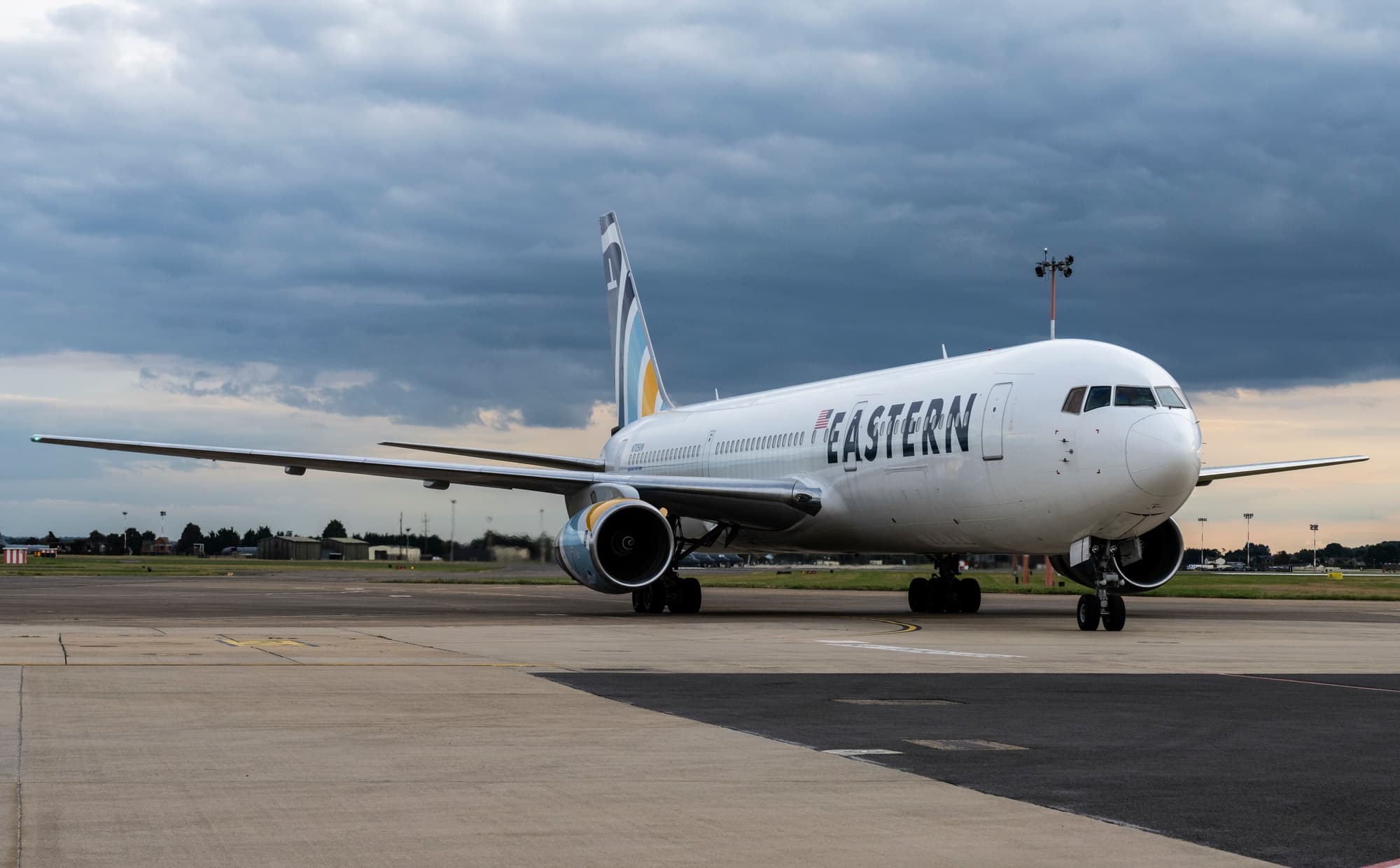
Patriot Express vs. True Space-A: What's the Difference in 2026
AMC's Patriot Express commercial rotators and cargo Space-A missions share a sign-up but almost nothing else. The operational comparison — schedule, fees, pets, baggage, delays, boarding priority.
Tips & Data

5 Things First-Time Space-A Travelers Get Wrong (And How to Fix Them)
Five fixable mistakes most first-time Space-A travelers make — and the playbook for avoiding each one before your first flight.
Tips & Data
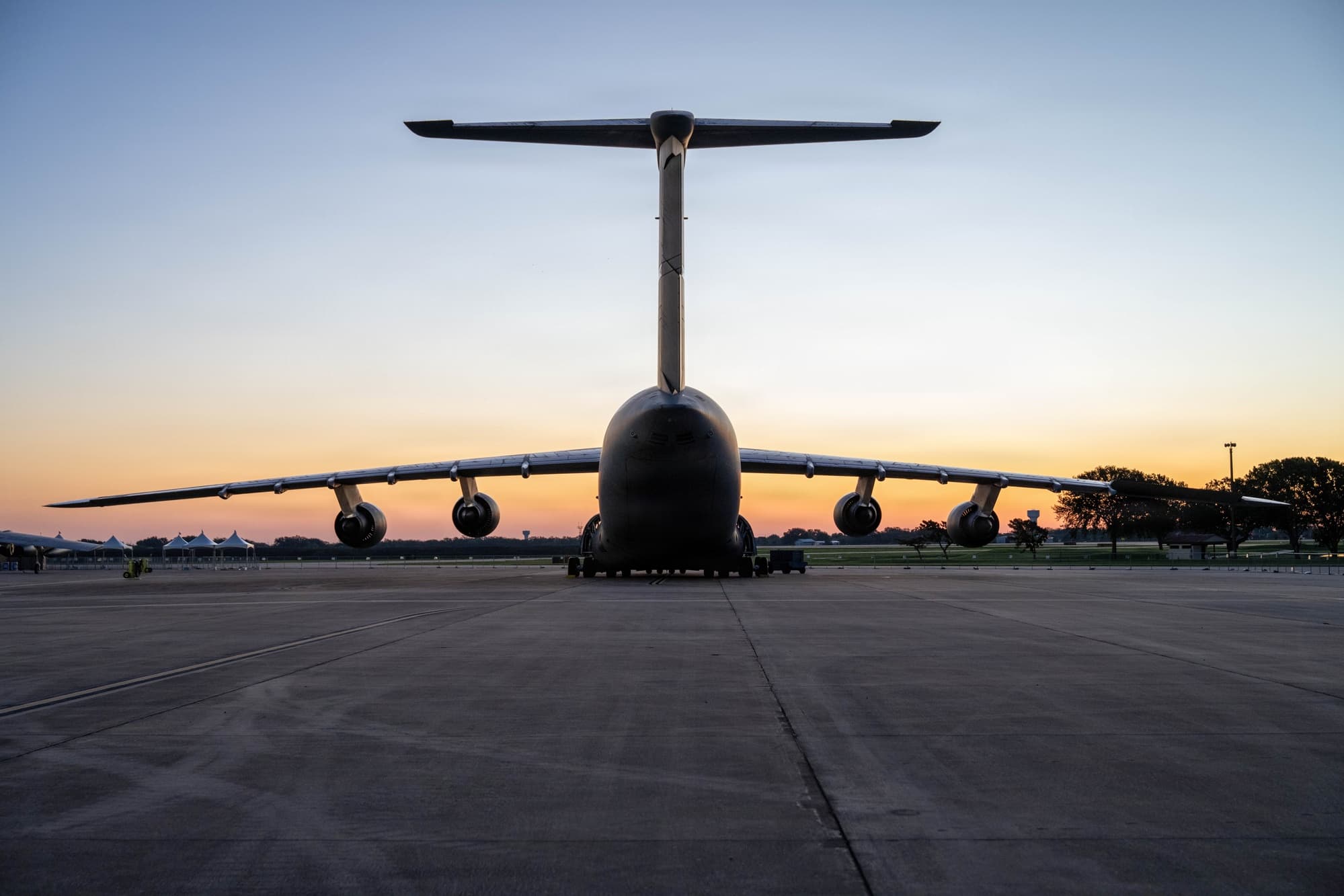
Cat VI Space-A Travel: Realistic Expectations in 2026
What Cat VI Space-A travel actually looks like in 2026: real selection rates, route restrictions, and what success means as the lowest-priority traveler.
Tips & Data