Tips & Data
5 Things First-Time Space-A Travelers Get Wrong (And How to Fix Them)
Five fixable mistakes most first-time Space-A travelers make — and the playbook for avoiding each one before your first flight.

Photo: U.S. Navy / Office of Information, Commander U.S. 7th Fleet (courtesy photo), DVIDS. Public domain.
You probably know more than you think about Space-A. You've read the Beginner's Guide. You've watched a YouTube video or two. You understand priority categories, the 60-day window, the difference between Patriot Express and cargo missions. And you're still going to make at least one of the five mistakes below on your first trip, because they're the kind of mistakes the regulations don't really warn you about — they're operational, not informational.
This is the playbook for avoiding them. Each one comes from watching first-timers cycle through the same patterns at terminals across the AMC network, and each one has a simple fix that costs nothing.
Mistake #1: Signing up at one terminal
The single biggest first-timer failure. You read the Beginner's Guide, picked the terminal closest to home, signed up, and that's where you'll fly out of, right?
Wrong. Space-A sign-up is per terminal, not per traveler. You can sign up at as many terminals as you want — each one is an independent shot at a flight, all on the same 60-day window, all using your same priority category. Signing up at one terminal turns a manageable multi-shot problem into a one-shot gamble.
The math. If a given flight has a per-Cat-VI selection rate of 30%, signing up at one terminal with one flight per week is a 30% shot. Signing up at three terminals with three flights per week is 1 − (1 − 0.3)³ = 65.7%. Five terminals with five flights per week is 83%. Same traveler, same category, same week — the only thing that changed is sign-up count.
The fix. Sign up at three to five terminals serving your route. If you're trying to reach Europe from the East Coast, that means Dover, BWI, JB McGuire-Dix-Lakehurst, JB Lindsey Graham, and Norfolk. If you're heading west to the Pacific, that means Travis, JB Lewis-McChord, Seattle-Tacoma, and Hickam.
The catch: signing up at five terminals by email takes about an hour and requires you to track five separate confirmation responses. The Space-A+ Plan a Trip feature does it in one form submission and tracks responses for you.
Mistake #2: Signing up too close to your travel date
Sign-up windows open 60 days before travel. Most first-timers wait until 7 to 14 days before. Within a priority category, position is set by sign-up date and time, in Zulu (GMT) per DAFI 24-605V2 § 2.29.1. So if you sign up Tuesday and another Cat VI traveler signed up two weeks earlier, they board first — even though you're both in the same category for the same flight.
This matters less at low-volume terminals and on quiet weeks. It matters enormously at Ramstein in spring or Travis in July, where the Cat VI backlog can run to several hundred travelers within the same 60-day window. Every day you wait, you lose ground.
The fix. Sign up the moment your 60-day window opens. The simplest way to make sure that actually happens: let Space-A+ Plan a Trip do it for you. Enter your trip once, and the platform submits your sign-up to every relevant terminal automatically the moment your window opens — no spreadsheet, no calendar reminders, no copy-paste loop the night before your trip. If you'd rather do it manually, set a calendar alert for 61 days before your intended travel date and budget the time. Either way: submit early. If you're not sure of your exact dates yet, sign up anyway — your sign-up expires automatically after 60 days if you don't fly, with no penalty. The downside of an early sign-up that you don't use is zero. The downside of a late sign-up is losing roll-call ties to travelers who beat you by a day.
One important nuance: active-duty members cannot sign up before the effective date of their leave (DAFI 24-605V2 § 2.31). If you're active duty, your sign-up window opens when your leave starts, not 60 days before your trip.
Mistake #3: Arriving at the terminal too late
Roll call is when the terminal announces the flight, releases the seat count, and calls names in priority order. Per DAFI 24-605V2 § 2.34, roll call happens no earlier than 2 hours 20 minutes before scheduled departure. Most terminals run earlier than the floor — Ramstein at 4h 20m, Dover around 4h, BWI typically 3h.
First-timers often think "show up at roll-call time." This is wrong, for two reasons.
Reason 1: You can mark yourself present up to 24 hours before scheduled roll call. Do it. The reason is operational: if only a few Space-A passengers have marked present by an hour before roll call, terminal staff will tell mission planners that cargo can be loaded into pallet positions that would otherwise hold seats. Marking present early signals demand and protects the seats. On cargo aircraft, this is the difference between a low-seat-count manifest and a much larger one.
Reason 2: Anything can happen at the terminal in the hour before roll call — schedule slips earlier, seat counts change, a different flight gets added or cancelled. Arriving 30 minutes before roll call means you miss the announcement, miss the schedule update, and miss the chance to consolidate baggage if the crew approves floor loading.
The fix. Arrive at the terminal 2 to 3 hours before scheduled roll call — enough margin to absorb a schedule slip and settle in. Mark present immediately on arrival (or up to 24 hours before, which is even better). Watch the board. Listen for announcements. If your name is called and you aren't physically standing at the counter, you're skipped — and the terminal staff don't go looking for you.
Mistake #4: Overpacking
Two checked bags up to 70 lbs each is the standard AMC allowance. Most first-timers max this out. They shouldn't.
Why. Per DAFI 24-605V2 § 4.7.5, load planners on cargo aircraft must leave a pallet position open for palletized baggage when carrying 20+ passengers. That's the reason a cargo flight with much more seating capacity shows only 19 Space-A seats on the board. The escape hatch: if every passenger packs down to one carry-on plus a small backpack, the crew can often floor-load baggage and seat more than 19 passengers.
You can be the difference between a 19-seat manifest and a much fuller one. Or you can be the family of four with eight checked bags that prevents the floor-load workaround and pushes other Space-A passengers off the manifest. Pack light.
The fix. One carry-on per traveler. One small backpack with documents, electronics, snacks, and a layer. Skip the second checked bag unless you're moving — leisure trips don't need it. If you're flying Patriot Express specifically, you have more headroom, but the carry-on-only approach still wins because the boarding process is faster and you don't risk delayed baggage.
Mistake #5: Treating Space-A like a confirmed reservation
This is the meta-mistake, the one that produces all the bad-trip stories. First-timers plan a Space-A trip like a commercial ticket — pick the flight, plan the destination week, book the hotel, schedule the return. Then Space-A doesn't work that way, and they're stranded.
The fix is a mindset change. Space-A is standby travel with extra paperwork. It is not a confirmed seat. The travelers who do well at Space-A:
- Don't book hard commitments inside the trip window. No work meetings on day 7, no concerts day 10, no must-attend events on the return.
- Always have a Plan B commercial ticket. Price it before the trip. Bookmark it. Have the credit card ready. If Space-A breaks, you don't argue with the terminal — you walk out and buy the commercial ticket.
- Build a 3 to 7 day buffer. Outbound buffer protects the destination plan; return buffer protects work and life.
- Treat the first failed flight as data, not disaster. Take notes. Adjust. Try again.
You can't fix the planning mindset with a checklist; you have to internalize it before the trip. The single best test: ask yourself, "If I'm not on a flight by day X of this trip, what do I do?" If the answer is "I'm screwed," you haven't planned enough buffer. If the answer is "I pay $700 and fly United," you're ready.
Ready to plan your Space-A trip?
Save destinations, set alerts, and let Space-A+ auto-send sign-ups when matching flights appear.
Plan a trip →The compounding effect
These five mistakes don't fail you one at a time — they multiply. A first-timer who signs up too late at one terminal, arrives 30 minutes before roll call, brings two overstuffed checked bags, and needs to be home Sunday for work is essentially guaranteed to fail their trip. Each individual mistake is forgivable; the combination is fatal.
The good news is the inverse is also true. Sign up early at five terminals, arrive 3 hours early, pack one carry-on, build a buffer — and you'll get on a flight on most reasonable routes, in most reasonable weeks, in most categories.
What about Cat I–III travelers?
The five mistakes still apply, but with different weights. A Cat III active-duty traveler can usually survive late sign-up or single-terminal registration because their category boards much earlier. They cannot survive arriving late to roll call or packing too heavy — both are physical-presence rules that ignore category.
The lower your category, the more each mistake costs you. Cat VI travelers can't afford to get any of them wrong. (See our companion piece on Cat VI realistic expectations for the per-category math.)
A first trip plan that minimizes mistakes
If you're planning your first Space-A trip, do this:
- Pick a flexible 10-day window. Avoid June 1 – Aug 15, Dec 15 – Jan 5, and DoDEA spring break.
- Check eligibility. Eligibility Wizard — two minutes.
- Sixty-one days before the window starts, set a calendar alert. Sign up at five terminals serving your route the moment the window opens. (Or use Plan a Trip to do it automatically.)
- Renew expiring documents. ID cards, passports — anything expiring within 6 months.
- Pack one carry-on and a backpack. Test that you can carry both.
- Pre-price the commercial Plan B ticket. Bookmark the link. Have the card ready.
- Day 1: arrive at the terminal 2 to 3 hours before roll call. Mark present immediately (or up to 24 hours earlier if you're at the terminal already).
If you do all seven, you'll be ahead of most first-timers.
Questions we hear
FAQ
Can I sign up at every terminal in the network?
You can sign up at as many terminals as you want. There's no cap and no penalty. Most travelers find three to five is the sweet spot — beyond that, the marginal additional shot adds little because you can't physically be at more than one or two terminals at once.
Is there a downside to signing up early and not traveling?
No. Your sign-up stays active for the full 60-day window and then expires automatically. There's no penalty for not flying. You can re-sign-up for a future trip whenever you're ready.
What if I marked present 24 hours early but a flight gets added that's earlier?
Mark-present applies to a specific flight, not a date. If a different flight gets added that you want to try, mark present for that one. You can be marked present for multiple flights in the same day if they're separated by roll-call timing.
Does packing light really matter on the Patriot Express?
Less than on cargo aircraft, but still some. PE has formal baggage allowances and doesn't have the same load-planning constraints. Cargo aircraft is where packing light directly affects how many people get on.
What's the worst time of year to try Space-A as a first-timer?
The two-week run from Dec 22 through Jan 5 — DoDEA winter break overlaid on the Christmas and New Year holiday surge. Cat III and below get squeezed hard at every major terminal. Save the first trip for October or late January.
Do I need to cancel a sign-up if my plans change?
No — sign-ups expire automatically after the 60-day window, and there's no penalty for not flying on an active sign-up. If your plans change, just don't show up. If you want to keep your records tidy, you can email the terminal and ask them to remove you, but it's optional. In Space-A+, you can archive or delete a trip from your dashboard for your own organization; the platform doesn't manage terminal-side records on your behalf.
Plan a clean first trip
Get the next flight first.
A free account unlocks the full 72-hour board and 30-day schedule at every terminal.
Create a free account →Related reading
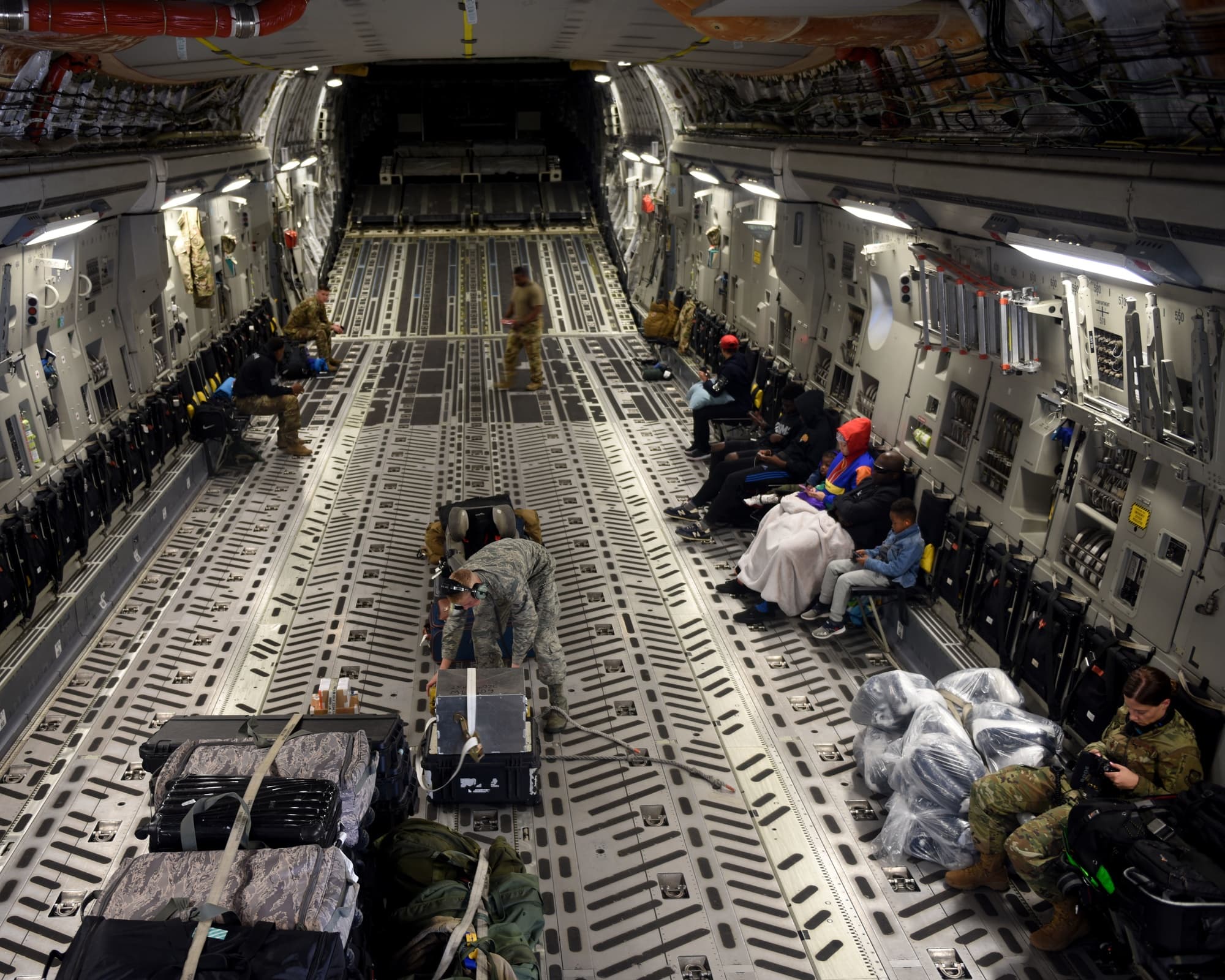
How Space-A Actually Works in 2026
How military Space-A travel really works in 2026 — sign-up windows, roll call, the new DAFI rules, and what nobody tells first-timers.
Beginner Basics
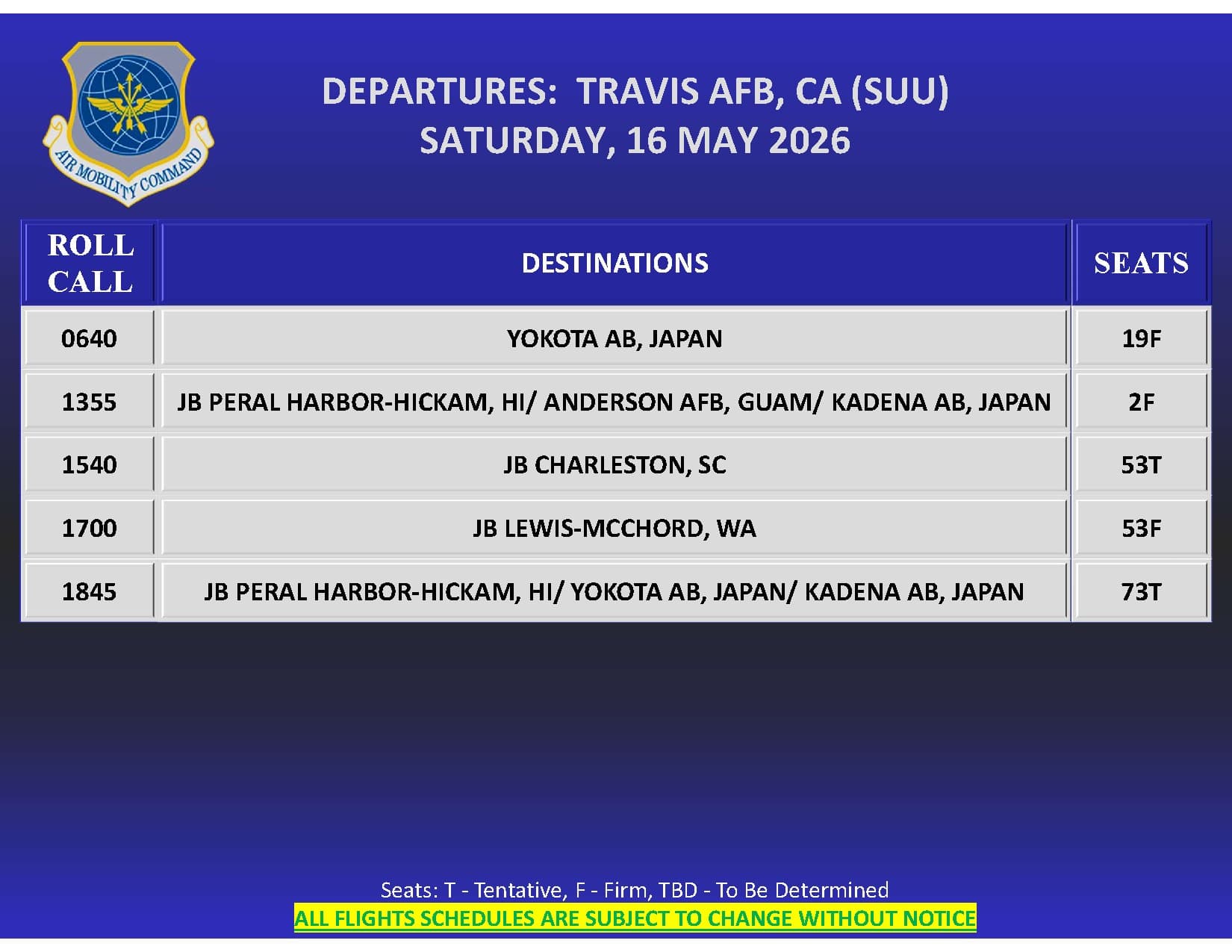
How to Read an AMC 72-Hour Schedule
How to read the AMC 72-hour schedule for Space-A travel — what each field means, when the board updates, and how to use it to plan a real trip.
Beginner Basics
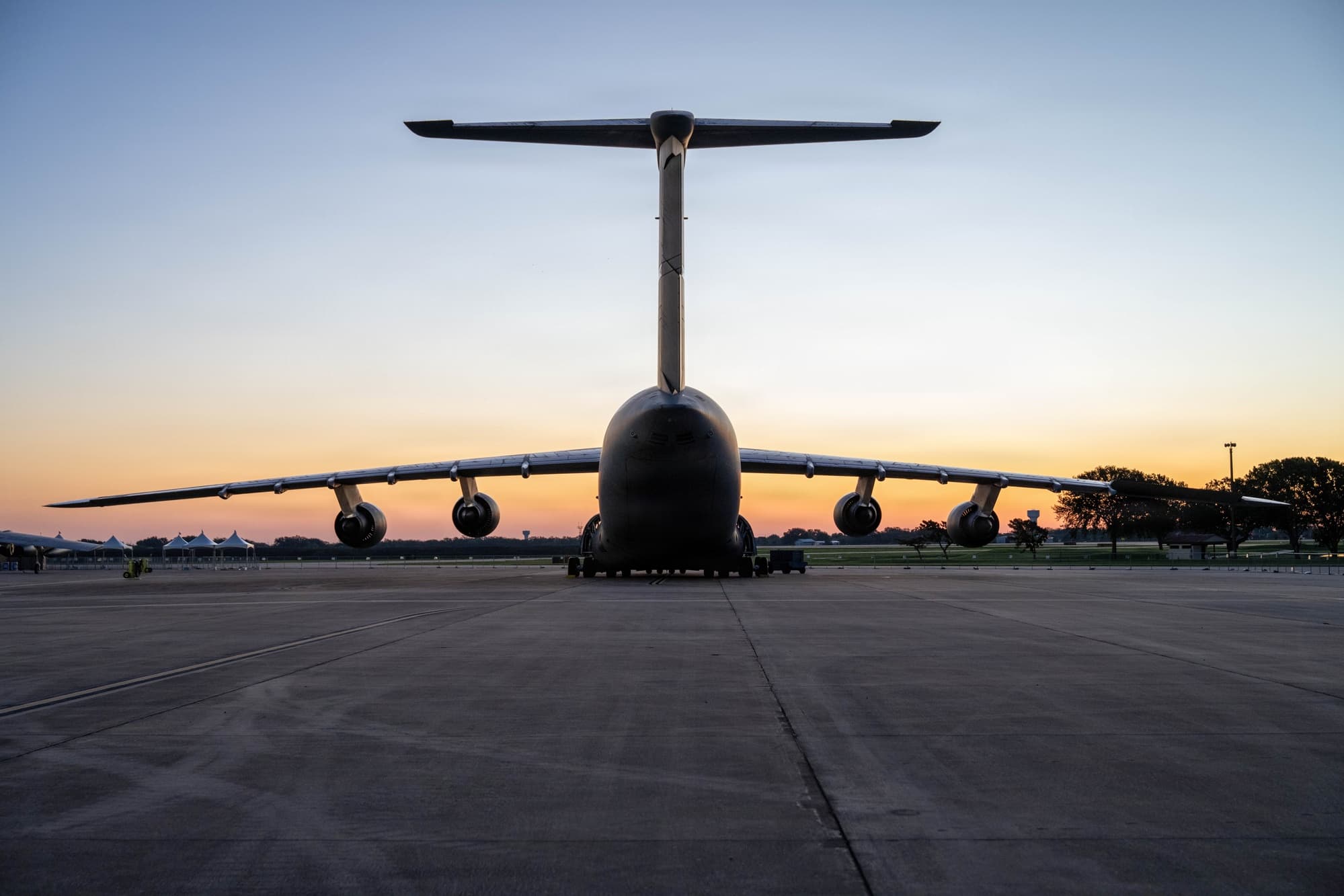
Cat VI Space-A Travel: Realistic Expectations in 2026
What Cat VI Space-A travel actually looks like in 2026: real selection rates, route restrictions, and what success means as the lowest-priority traveler.
Tips & Data